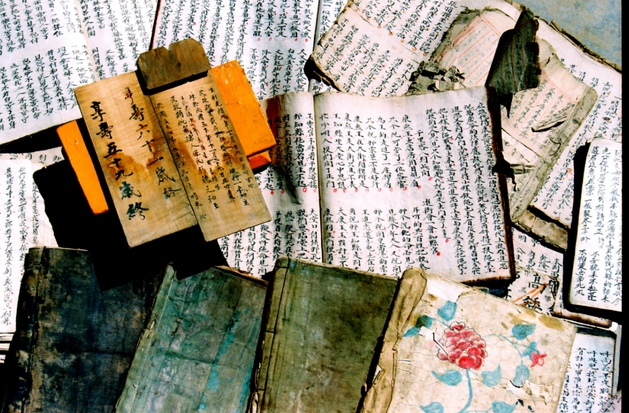
Hexi Baojuan
Introduction
The Hexi Baojuan, literally meaning "the precious volumes of Hexi Corridor," is a traditional story-telling art form originating from the Hexi Corridor in China. Known for its narrative style and deep cultural roots, Hexi Baojuan serves as a vital conduit for the transmission of historical epics and cultural values across generations.
Historical Background
Hexi Baojuan is steeped in history and is tied to the narratives that have formed the cultural bedrock of the Hexi Corridor region. This area, historically significant for its role as a part of the ancient Silk Road, is a conduit for cultural and economic exchanges between China and the West. The art form reflects this rich historical backdrop, encapsulating centuries-old epics that are passed down through oral traditions.
Cultural Significance
The Hexi Baojuan is more than a storytelling medium; it is a vital cultural heritage that embodies the moral and ethical values of the communities in the Hexi Corridor. The narratives often include themes of righteousness, courage, and loyalty, which are conveyed through intricate storytelling techniques and vivid character portrayals. This art form has contributed to cultural identity and continuity among the people of Hexi.
Notable Practitioners
Prominent figures such as Qiao Yu'an have been pivotal in preserving and promoting Hexi Baojuan. Qiao, who dedicated decades to this art form, played a crucial role in embedding these stories into the collective memory of the community. His dedication ensured that the ancient epics and the values they contain continued to resonate with newer generations.
Challenges and Preservation Efforts
Despite its cultural richness, Hexi Baojuan faces challenges in the modern era, particularly as traditional lifestyles give way to urbanization and fast-paced living. The art form's preservation is threatened by a decline in interest among younger generations, similar to other intangible cultural heritages across China.
Efforts to preserve Hexi Baojuan have been bolstered by initiatives such as the "Chinese Memory" documentary program, which aims to record and document the lives and practices of intangible cultural heritage (ICH) inheritors. By capturing these stories on film, the program seeks to prolong the existence of such cultural heritage in the public consciousness.








